


It depends on hidden costs. While online platforms offer AI-driven flash sales and deep discounts, surge pricing for express delivery and convenience fees can add up. Offline stores often provide better value for bundle deals and eliminate shipping fees, making them competitive for bulkier items.
We independently review everything we recommend. When you buy through our links, we may earn a commission. How we evaluate
Online Shopping vs Offline Shopping: Which Is Better in 2026?
Last updated 3rd January 2026
7 min read
Table of Contents
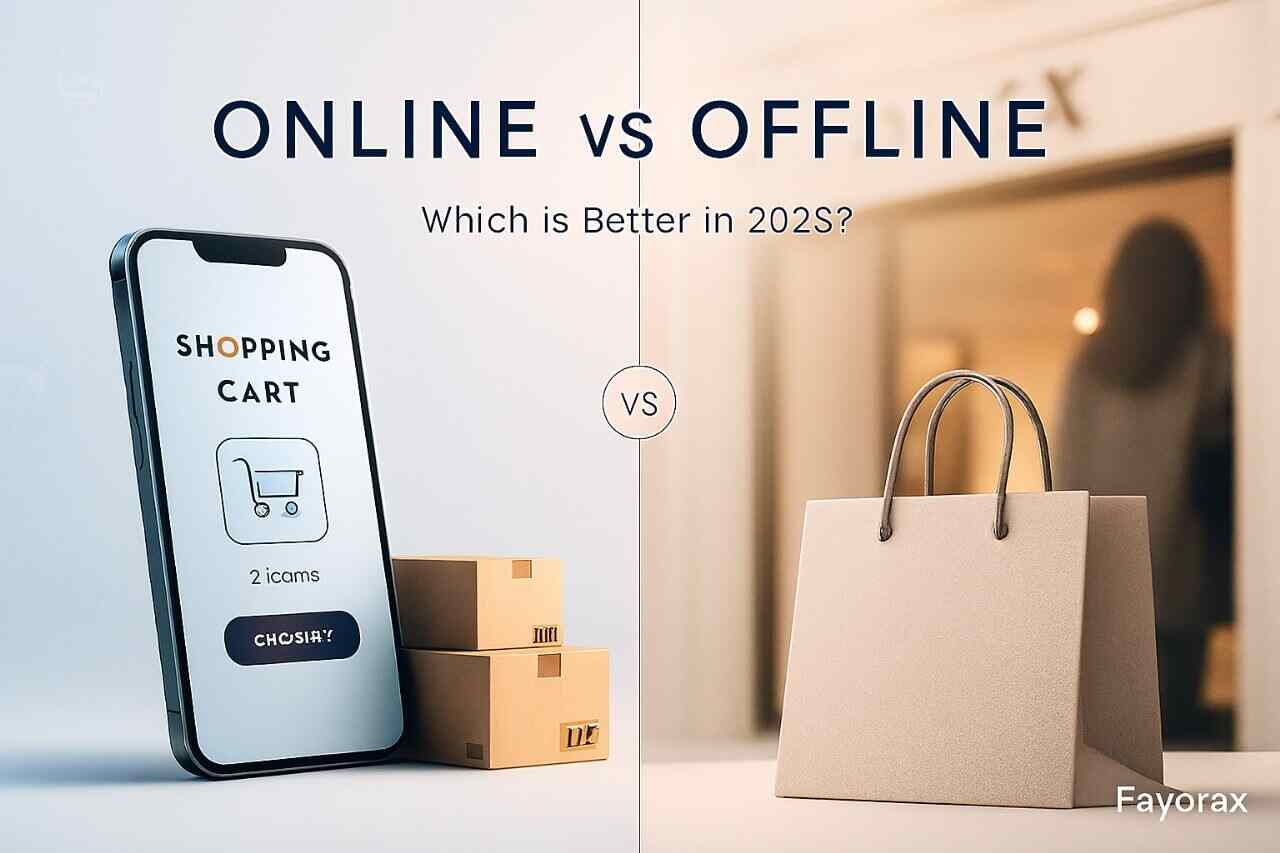
By 2026, nearly 1 in 10 retail dollars is spent online, yet most shoppers still value visiting physical stores. Online shopping offers unmatched convenience, letting people browse, compare, and order products from home with just a few clicks. The e-commerce market continues to grow rapidly, reflecting how digital shopping has become a core part of everyday life.
At the same time, offline stores remain relevant, offering experiences that screens can’t replicate touching, trying, and testing products in person. Modern shopping is increasingly “phygital,” blending online convenience with in-store experience. Consumers now browse online, compare prices, and then visit stores to finalize purchases, showing that omnichannel habits are replacing the old online vs offline debate.
Advantages & Disadvantages of Online Shopping
Online shopping has evolved from a luxury to a daily utility. With AI, automation, and smarter platforms, the convenience is unmatched but it also comes with modern trade-offs.
Pros
- 24/7 Accessibility: Shop anytime
- AI Personalization: Algorithms suggest products you need
- Subscription Models: Automated recurring orders for essentials
- Instant Price-Hacking: Compare deals across multiple platforms
- Niche Variety: Access products and brands not available locally
Cons
- The "Touch" Gap: Cannot feel fabrics or test product quality
- Return Friction: Returns can be slow or confusing
- Cyber-Risk: Phishing, fake listings, and data privacy concerns
- Hidden Costs: Shipping fees and convenience charges
- Environmental Impact: Packaging waste and delivery emissions
“
“
💡2026 Pro-Tip: To combat "Return Friction," look for retailers that offer VR Try-Ons or Home-Trial services. These digital tools are closing the "Touch Gap" and reducing the need for returns by up to 30%.
Note: Whether you shop online for the best smart home gadgets in India to automate your life, or prefer visiting stores to feel the quality of sustainable eco-friendly home products, the goal in 2026 is to balance high-tech convenience with a conscious lifestyle.

Must-Have Eco-Friendly Home Products for Sustainable Living
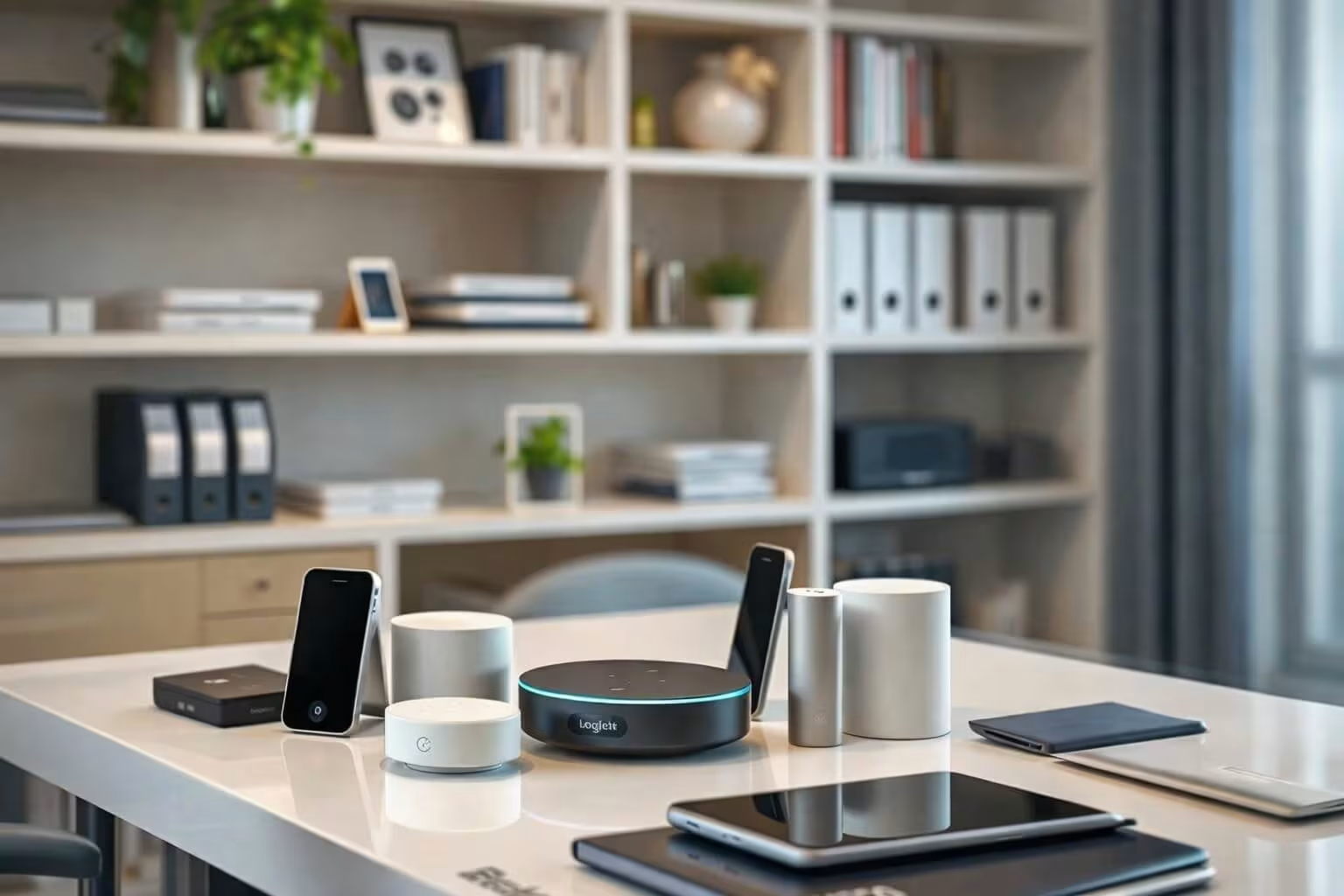
Best Smart Home Gadgets India 2026 You Must Try
Advantages & Disadvantages of Offline Shopping
Despite the rise of digital commerce, physical retail has rebranded itself as "Retailtainment" a blend of shopping and entertainment. Yet, the physical world has its own set of hurdles.
Pros
- Instant Gratification: Buy and take home immediately
- Sensory Certainty: See the color and feel the fabric
- Zero Shipping Damage: Handle the product yourself
- Expert Interaction: Staff provide demos and guidance
- Social Element: Stores serve as community hubs
Cons
- Inventory Uncertainty: Your size or model may be out of stock
- The "Search" Struggle: Finding items in aisles takes time
- Logistical Overhead: Fuel, parking, and traffic add costs
- Fixed Hours: Stores are not open 24/7
- Limited Reviews: Cannot access thousands of customer reviews instantly
Cost Comparison
When it comes to cost, online and offline shopping each have unique advantages and hidden expenses.
Online platforms often offer competitive pricing, flash sales, and app-exclusive deals that make products cheaper than in-store alternatives. Loyalty programs, subscription models, and cashback offers further reduce costs, rewarding frequent buyers automatically. However, hidden fees like shipping charges, packaging costs, and surge pricing for express delivery can add up, sometimes offsetting the savings.
Offline shopping lets shoppers access in-store discounts, clearance sales, and bundle offers firsthand. While the sticker price may seem higher, there are no delivery fees and instant ownership removes waiting costs. Traveling to stores involves fuel, parking, and the opportunity cost of time, which can make purchases more expensive than they initially appear.
Quick Value
- Online Wins For: Bulk groceries, subscription-based essentials, mid-range electronics, and products with easy price-matching
- Offline Wins For: Luxury goods, fresh produce, and last-minute emergency purchases
Overall, evaluating cost in 2026 is not just about the price tag. It is about factoring in convenience, loyalty perks, and hidden expenses to see which option offers true value for each purchase.
Experience & Safety: The Head-to-Head Comparison
While price matters, the friction of the experience often determines where people shop. Here is how online and offline shopping stack up across the customer journey in 2026:
Future Trends: The Rise of "Agentic Retail"
By 2026, the boundary between scrolling and strolling has almost vanished. The future of shopping is defined by three major shifts:
- AI Shopping Agents: Personal AI agents now handle price comparisons, coupon hunting, and even returns, making online shopping almost invisible. Consumers no longer rely solely on search bars or manual browsing.
- The Phygital Storefront: Physical stores are transforming into experience centers. Smart mirrors and AR try-ons let you "wear" a digital outfit in-store, while the physical version is shipped to your home before you leave.
- Hyper-Local Quick Commerce: Ordering and owning are nearly instantaneous. Dark stores, on-demand couriers, and drone deliveries are making online shopping as fast as a quick walk to a local shop.
The Bottom Line: In 2026, the choice is not between online or offline. Shoppers choose the path of least friction, blending technology and physical experiences seamlessly.
Conclusion & Recommendation
Both online and offline shopping have evolved significantly, and each offers unique advantages depending on your priorities. Online shopping excels in convenience, variety, and personalization, making it ideal for bulk purchases, subscription essentials, and shoppers who value speed and price comparisons. Offline shopping shines when sensory experience, instant ownership, and social interaction matter, making it perfect for luxury items, fresh produce, or last-minute needs.
In 2026, the smartest approach is not to pick one over the other. Hybrid and phygital models allow shoppers to combine the strengths of both worlds. Consider your priorities, the type of product, and the level of convenience or experience you want. Ultimately, the choice should focus on minimizing friction while maximizing satisfaction, creating a shopping experience tailored to your lifestyle.
Frequently Asked Questions
In 2026, the best way to verify quality is through AR try-ons and verified video reviews. For high-end fabrics or electronics, the "phygital" approach—browsing online and testing in an experience center—is the safest option.
For daily essentials, Quick-Commerce with 10-minute delivery is often faster than traveling to a store. For specific electronics or fashion, offline shopping wins with instant ownership and no risk of transit damage or shipping delays.
Beyond standard phishing, shoppers must watch for AI-generated fake product listings and "dark patterns" that push unwanted subscriptions. Using secure, tokenized payments and official brand apps helps protect your data.
A hybrid strategy works best. Use online shopping for automated subscriptions like groceries or toiletries, and for price-sensitive tech purchases. Use offline stores for high-stakes buys such as luxury items, fresh produce, and last-minute needs.
Published 3rd January 2026
About the Author

Soma Shiina | Beauty & Lifestyle Writing
Hi, I’m Soma a professional writer and blogger passionate about beauty, eco-friendly products, and sustainable household living. I specialize in creating insightful, research-backed articles that help readers make mindful lifestyle choices. My writing focuses on reviewing products, sharing eco-conscious tips, and highlighting innovations that make daily life both beautiful and sustainable.