

Yes. DJI Mic Mini can work with compatible smartphones through a Type-C or Lightning adapter, and the transmitter can also connect directly to smartphones through Bluetooth.
We independently review everything we recommend. When you buy through our links, we may earn a commission. How we evaluate
DJI Mic Mini Review: Wireless Microphone for Vloggers
Last updated 19th September 2026
9 min read
Table of Contents
Good audio can make a big difference in videos, especially for vlogs, interviews, streaming, travel videos, and social media content. The DJI Mic Mini is designed for creators who want clear wireless audio without carrying a large microphone setup.
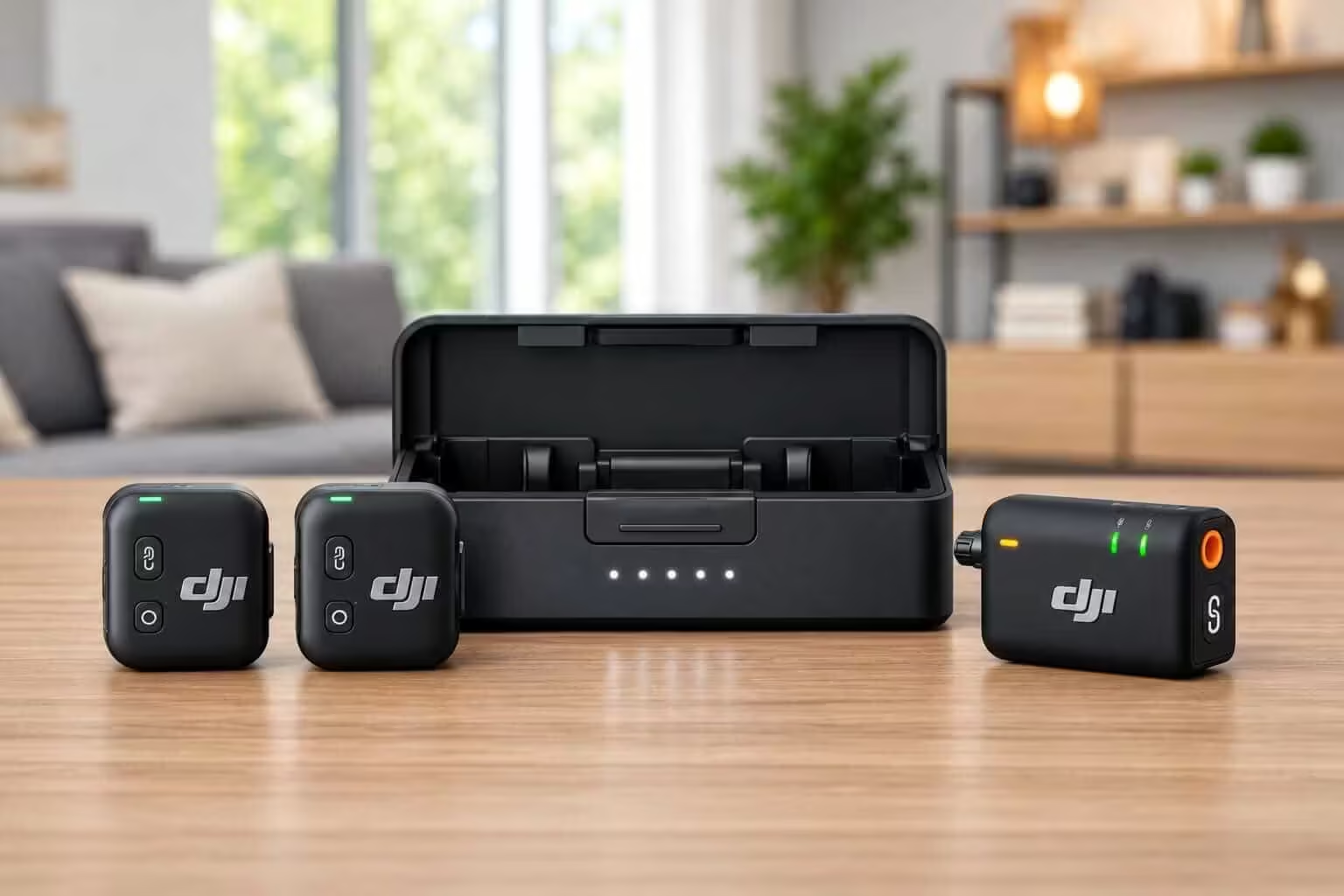
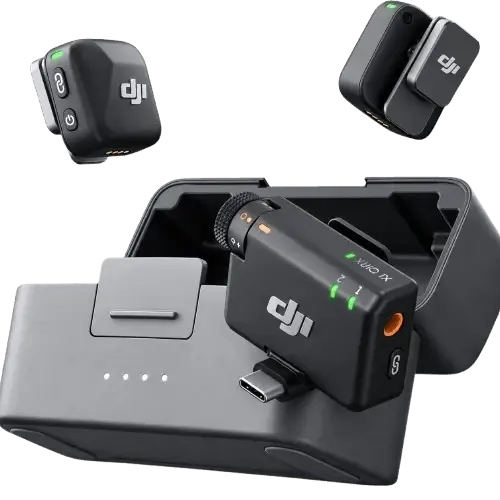
This 2-transmitter and 1-receiver kit comes with a charging case and focuses on three things: a small design, reliable wireless transmission, and long battery life. Each transmitter weighs about 10 g, so it can be clipped or magnetically attached to clothing without feeling heavy.
The microphone supports omnidirectional recording, two levels of active noise cancellation, automatic limiting, five gain levels, and DJI OsmoAudio direct connection with selected DJI devices. With a fully charged charging case, the system can provide up to 48 hours of extended operation.
Price and Availability
The actual Amazon price can vary depending on the seller, offers, taxes, and location.
For creators who need two transmitters, this kit offers more flexibility than a single-transmitter setup. If you mainly record yourself, a single-transmitter version may be enough.
4.3
4.3
4.3
4.3
₹8,882₹8,882
Prices may vary by location and availability, so check the latest price before buying to avoid any surprises.
Pros
- Very lightweight 10 g transmitter
- Compact and discreet design
- Two transmitters included
- Up to 48 hours with charging case
- Up to 400 m maximum transmission distance in ideal conditions
- Two-level active noise cancellation
- Automatic limiting helps prevent clipping
- Five adjustable gain levels
- Mono, Stereo and Safety Track recording modes
- Omnidirectional audio recording
- DJI OsmoAudio direct connection
- Works with compatible smartphones, cameras, and computers
Cons
- No internal recording on the transmitters, so a dropped signal means a lost take
- No 32-bit float recording
- 400 m transmission distance requires open, unobstructed conditions
- Some phone connections may require an adapter
- Direct DJI OsmoAudio connection works only with supported DJI products
- No display on the receiver, only button and LED controls
- Advanced users may want more professional recording controls
Specifications
Who Should Buy This DJI Mic Mini
Good Choice For:
- Vloggers who want a small wireless microphone
- YouTubers and social media creators
- Travel creators who need lightweight recording equipment
- Interview creators who need two transmitters
- Users recording videos with compatible smartphones and cameras
- DJI camera users who want OsmoAudio direct connection
- Creators who need long battery life for full-day recording
Not Ideal For:
- Users who only need a basic microphone for occasional indoor recordings
- Creators who do not need wireless freedom
- Users who need internal transmitter recording as a backup
- Professional videographers who need 32-bit float safety
- Users who want a receiver with a display
- Advanced creators who need more detailed onboard audio controls
Small and Discreet Design
One of the biggest advantages is its compact size. The transmitter weighs approximately 10 g without the clip magnet, making it comfortable to wear during long recording sessions. It can be attached using the clip or the magnetic mounting option.
The small body is useful when you do not want the microphone to become a noticeable part of your video. For travel vlogs, interviews, tutorials, and outdoor recordings, the lightweight design makes the setup easier to carry and use.
The transmitter measures approximately 26.55 × 26.06 × 15.96 mm, while the receiver weighs approximately 17.8 g including its interface cover. The receiver itself is kept simple, with a cold shoe mount, a 3.5mm port and basic button controls rather than the touchscreen found on the DJI Mic 2.
Clear Audio With Reliable Wireless Transmission
The system uses omnidirectional audio recording, allowing the transmitter to capture sound from around the speaker rather than requiring the person to speak directly into one side of the microphone.
The receiver can pair with two transmitters at the same time, which is what makes this kit suitable for interviews, two-person vlogs, podcasts, and collaborative videos.
DJI specifies a maximum transmission distance of up to 400 meters in an open, unobstructed environment without interference. Walls, buildings, crowds, wireless signals, and other obstacles can reduce this distance.
Gain Control, Recording Modes and Safety Track
The DJI Mic Mini offers five adjustable gain levels, so input levels can be matched to the environment instead of relying on a single fixed setting.
It also supports three recording modes. Stereo records each transmitter on a separate channel, Mono combines both transmitters into one channel, and Mono with Safety Track records a second track at a lower volume as a backup against sudden volume spikes.
The automatic limiting feature works alongside this to help prevent audio clipping when someone suddenly speaks loudly or laughs. Together these give you a reasonable amount of post-production flexibility for a kit at this size.
One important limitation to understand is that the transmitters do not record internally. If the wireless signal is interrupted during a shoot, there is no onboard backup file to fall back on, which is the main trade-off compared with larger and more expensive systems.
Long Battery Life for Full-Day Recording
A transmitter can operate for up to 11.5 hours, while the receiver can operate for up to 10.5 hours under DJI's stated test conditions.
The charging case extends the total operating time to up to 48 hours, and a fully charged case can provide about 3.6 full charges when charging two transmitters and one receiver together.
This makes the kit practical for travel and long recording days. Instead of carrying separate charging equipment for every recording session, you can place the transmitters and receiver back into the case between uses.
Two-Level Noise Cancellation
The DJI Mic Mini has two active noise cancellation levels: Basic and Strong. Basic is intended for relatively quiet environments and can help reduce sounds such as fans, air conditioning, and room noise while maintaining vocal clarity. Strong is designed for noisier surroundings and cuts more ambient sound to make speech easier to hear.
For example, Basic can be useful when recording inside a room, while Strong can be more suitable for a busy street, outdoor location, or crowded environment. Noise cancellation is not a replacement for a quiet recording location, but it can help when controlling the surrounding environment is difficult.
Easy Connections and Device Compatibility
Connecting with cameras, smartphones, and computers is straightforward. With supported DJI devices, the transmitters can connect directly without the receiver using DJI OsmoAudio, making the setup smaller and easier for vlogging and travel recording.
For cameras, the receiver mounts on the cold shoe and connects through the 3.5mm camera audio cable. For smartphones, a compatible Type-C or Lightning adapter may be required depending on the device, although the transmitter can also connect to phones over Bluetooth.
DJI Mic Mini vs Newer DJI Mic Models
DJI has since released the Mic Mini 2 and the Mic Mini 2S, so it is worth knowing where the original sits.
The Mic Mini 2 adds Vocal Tone presets for instant EQ adjustment, swappable coloured magnetic covers, and a slightly heavier 11 g transmitter. The Mic Mini 2S goes further with support for up to four transmitters on one receiver and internal storage on the transmitters, which directly addresses the original's biggest weakness.
The original Mic Mini remains relevant mainly on price. If you find it discounted and you record in controlled conditions where signal dropouts are unlikely, it still delivers the same core audio quality and battery life. If backup recording matters to you, the newer models are the safer buy.
Final Verdict
The DJI Mic Mini is a practical wireless microphone for creators who want better audio without carrying a large recording setup. Its 10 g transmitter, two-transmitter configuration, long battery life, active noise cancellation, and automatic limiting make it well suited to everyday content creation.
The up to 48-hour operating time with the charging case is particularly useful for travel and long shooting sessions, while the 400 m maximum transmission distance gives plenty of wireless freedom when conditions are suitable.
The main reservation is the lack of internal recording, which makes it a better fit for casual and everyday shoots than for paid work where a lost take is not an option. Within that limit, it is a strong option for creators looking for a small, easy-to-carry wireless microphone system with two transmitters and long battery life.
Frequently Asked Questions
The transmitter can operate for up to 11.5 hours and the receiver for up to 10.5 hours. With the charging case, the system can provide up to 48 hours.
DJI Mic Mini has a maximum transmission distance of up to 400 meters in an open, unobstructed environment. Real-world range can be shorter because of obstacles.
Yes. It provides two active noise cancellation levels: Basic and Strong. Basic is designed for quieter environments, while Strong is intended for noisier surroundings.
No. The transmitters do not offer internal recording, so there is no backup file if the wireless signal is interrupted. The Mono with Safety Track mode only helps against volume spikes, not signal loss.
Yes. The transmitters support DJI OsmoAudio direct connection with selected compatible DJI products, including Osmo Action 5 Pro, Osmo Action 4 and Osmo Pocket 3.
The Mic Mini 2 adds Vocal Tone EQ presets and magnetic colour covers, and the Mic Mini 2S adds internal recording and support for four transmitters. Choose the original mainly if it is significantly cheaper and you do not need backup recording.
Published 19th September 2026
About the Author

Sahed Badsha | Tech Journalist
Hi, I’m Sahed a professional blogger and content strategist focused on technology, products, and digital innovation. I specialize in writing clear, research-backed articles that simplify complex topics for everyday readers. Over the years, I’ve worked on blogs, product reviews that help readers make smarter digital choices while staying informed about emerging product trends.
Related Reviews
DJI Osmo Action 6 Review: Is It Worth It?
24 Mar 2026
Read more
DJI Osmo Action 4 Review: Best Action Camera for Outdoor Adventures
22 Mar 2026
Read more
DJI Osmo 360 Adventure Combo Review: 8K Camera
7 Mar 2026
Read more
FitSpark Eagle i15 Pro Max Review for Vlogging and Travel
25 Jan 2026
Read more
GoPro MAX 2 Review: True 8K 360 Action Camera for Creators and Travelers
24 Jan 2026
Read more
DJI Osmo Pocket 3 Review: Compact 4K Camera for Vlogging and Travel
23 Jan 2026
Read more
DJI Osmo Action 5 Pro Review: Best for Vlogging?
20 Jan 2026
Read more
Insta360 X3 Review: Best 5.7K 360 Action Camera
9 Jan 2026
Read more
GoPro HERO13 Black Review: Worth Buying?
28 Dec 2025
Read more
Insta360 X4 Review: Best 8K 360 Camera for Vlogging
27 Dec 2025
Read more
GoPro HERO12 Review: Best Waterproof Action Cam?
22 Dec 2025
Read more
Insta360 X5 Review 2026: 8K 360° Camera for Vlogging and Everyday Use
19 Dec 2025
Read more